
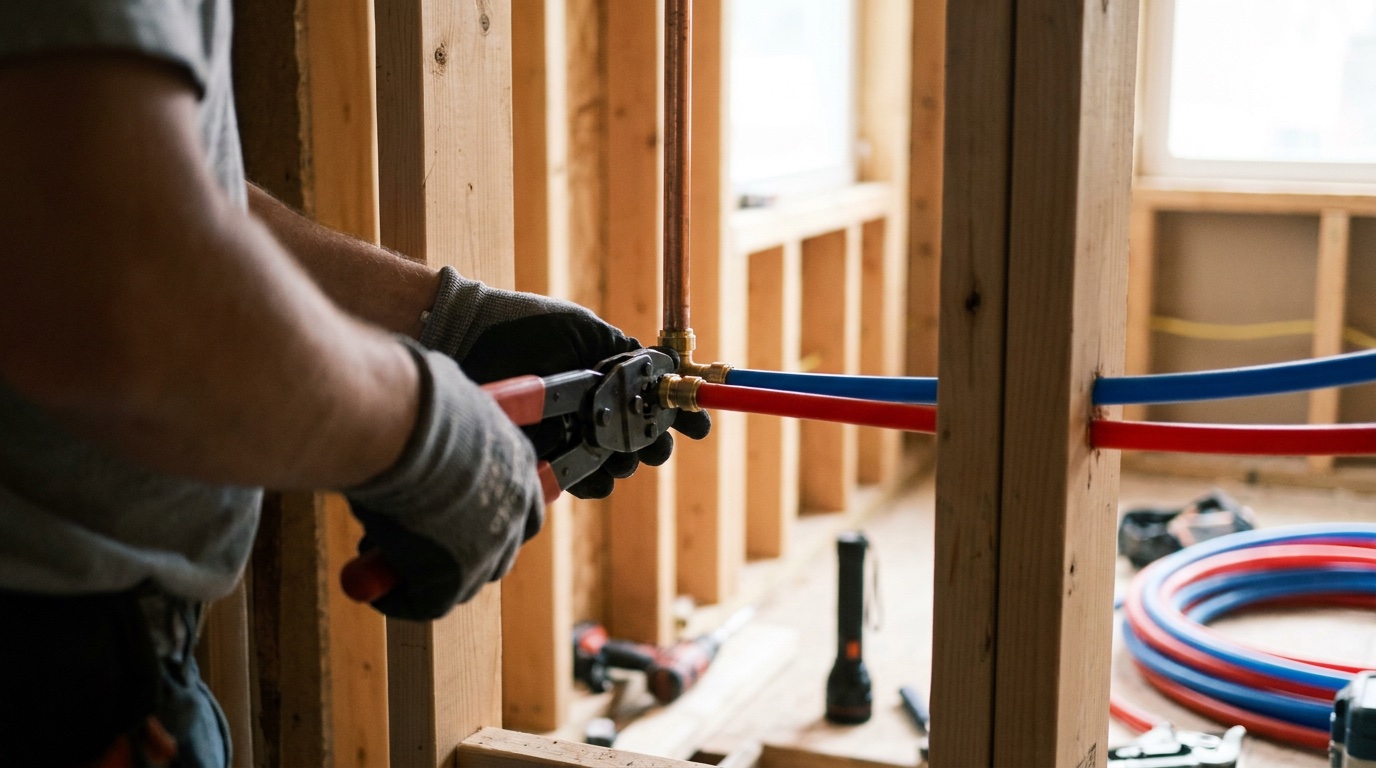
Plumbing & Whole-Home Repipe
When patching one more pinhole stops making sense — we replace the pipe, not your patience.
There's a point where fixing leaks one at a time turns into a losing game. A galvanized supply line that's rusted shut from the inside, so the pressure at the shower drops to a trickle. Copper from the '70s that's started weeping pinholes, each one a new water stain on a different ceiling. That's when a repipe stops being a big project and starts being the cheaper option than another year of drywall repairs and emergency calls.
We do the full range: single-fixture repairs, slab-leak location and reroute, water-heater changeouts, and whole-home repipes that swap out every supply line in the house. One licensed crew opens the walls, runs the new pipe, pressure-tests it, patches back, and pulls the permit — so you get one accountable team from the first leak to the last inspection.
We open the fewest walls that get the job done
Repiping means access holes, but they don't have to be everywhere. We map the runs and cut strategically, then patch and texture back so you're not staring at a checkerboard of drywall for months.
PEX or copper — your call, explained
Both are good; they're good at different things. We walk you through where PEX saves money and flexes through tight framing and where copper still earns its price, then you decide with the trade-offs in front of you.
Pressure-tested before we close up
Every new line gets put under test pressure and held before a single wall goes back. Leaks get found on our clock, behind open studs, not six months later behind fresh paint.
Knowing when a repipe beats another repair
One leak is a repair. A pattern of leaks is a message. Galvanized steel — standard in a lot of Southern California homes built before the mid-'60s — rusts closed from the inside over decades, choking your flow and staining your water brown when it finally lets go. Certain runs of copper from the '70s and '80s develop pinhole corrosion, and once a house starts producing pinholes it tends to keep producing them, because the whole batch of pipe is the same age in the same water.
We'll tell you honestly which camp you're in. If it's a single failure on otherwise sound pipe, we fix that and leave the rest alone. But when we're seeing rust, chronic low pressure, and a second or third leak in a year, throwing money at patches is the expensive path. A repipe draws a line under it — new pipe, full pressure, and no more wondering which ceiling is next.
Slab leaks and the reroute decision
Homes here are frequently built on concrete slabs, with the water lines run underneath. When one of those buried lines fails, you get the classic signs: a warm spot on the floor, a spike in the water bill, the sound of running water with everything shut off. Jackhammering the slab to reach the leak is one option, and sometimes the right one, but it's invasive and it's rarely the end of the story on old pipe.
More often the smart move is a reroute: we abandon the failed line under the slab and run new pipe through the walls and ceiling to the same fixture, keeping the concrete intact. We locate the leak first with the right equipment so we're not guessing, then lay out both options — repair-in-place versus reroute — with the real costs so you can choose. On aging systems the reroute usually wins, because it also gets you off the pipe that's going to fail next.
PEX, copper and doing the connections right
The pipe material matters less than most people think; the workmanship matters more. Modern PEX is flexible, resists the pinhole corrosion that plagues copper, threads through tight framing without a dozen fittings, and costs less to install — which is why it's now the default on a lot of repipes. Copper is still excellent, handles heat and UV better in exposed runs, and some homeowners simply prefer it. Neither is wrong.
What actually determines whether a repipe lasts is the connections: proper transitions where new pipe meets old, dielectric unions where copper meets steel so you don't set up galvanic corrosion, supports at the right spacing so nothing rubs or sags, and every joint made to code. We size the lines to restore real pressure to every fixture, then prove it under test before we close a single wall.
A process built around no surprises
Diagnosis & pressure check
We test your static pressure, look at the pipe material and its condition, and find out whether you've got a localized failure or a whole-system problem that's only going to get worse.
Scope & fixed quote
You get a clear plan — which lines get replaced, where the access holes go, PEX or copper, and a line-item price. Nothing opens up until you've signed off.
Access & new lines
We shut off, drain down, and open the minimum access needed. New supply lines run through the framing to each fixture, tied into a fresh manifold or reworked mains as the layout calls for.
Pressure test & inspection
The system is charged, held under test pressure and checked at every connection. We schedule the permit inspection so the work is signed off by the city, not just by us.
Patch, texture & walk
Drywall closed, taped, textured to match, and we walk every fixture with you to confirm pressure and flow before we call it finished.
Everything, under one scope
- Whole-home repipe of hot and cold supply lines
- Galvanized and failing-copper replacement in PEX or copper
- Slab-leak location and above-slab reroute
- Water-heater replacement (tank and tankless)
- Shutoff valves, hose bibs, manifolds and pressure regulation
- Pressure testing, permit, inspection and drywall patch-back
Built with the good stuff
Plumbing & Repipe — common questions
How long does a whole-home repipe take?
Most single-family homes run two to four days for the pipe work, plus a day or two for drywall patch and texture. We give you a schedule up front, including which hours the water is off each day.
Will my water be off the whole time?
No. We keep it on overnight and shut down only during active tie-ins, and we tell you those windows in advance so you can plan around them. A single-bathroom home we sequence to keep the outages short.
PEX or copper — which should I choose?
Both are code-approved and long-lasting. PEX costs less, resists pinhole corrosion and installs faster through tight framing; copper handles heat and exposure better and some owners prefer it. We lay out the trade-offs and you decide.
How do I know if I have a slab leak?
Common signs are a warm spot on the floor, an unexplained jump in the water bill, low pressure, or the sound of running water when everything's off. We locate it with proper equipment before we open anything, then price your options.
Do you patch the walls back?
Yes. Drywall access, tape, and texture to match are part of the scope — we don't leave you with open holes to hire out separately. Final paint is usually the one item we'll flag as optional.
Is the work permitted and warrantied?
Yes. Repipes and water-line work are pulled under our license and inspected by the city, and our labor is warrantied in writing on top of the manufacturer warranties on materials.
What plumbing & repipe customers say
“They gutted our 1980s bathroom and turned it into something out of a magazine. The crew showed up on time every single day and cleaned up before they left. Worth every penny.”
“Our AC quit during a July heat wave and they had a new unit in the next morning. Honest pricing, no upselling, and the house has never been this comfortable.”
“We had engineered hardwood put in across the whole first floor. The installers were meticulous about the transitions and baseboards. Looks seamless.”
Homeowners often pair this with
Planning plumbing & repipe? Let's talk.
Tell us what you're planning and we'll set up a free, no-pressure estimate — usually within a day.
Licensed & insured — CSLB #1033999