
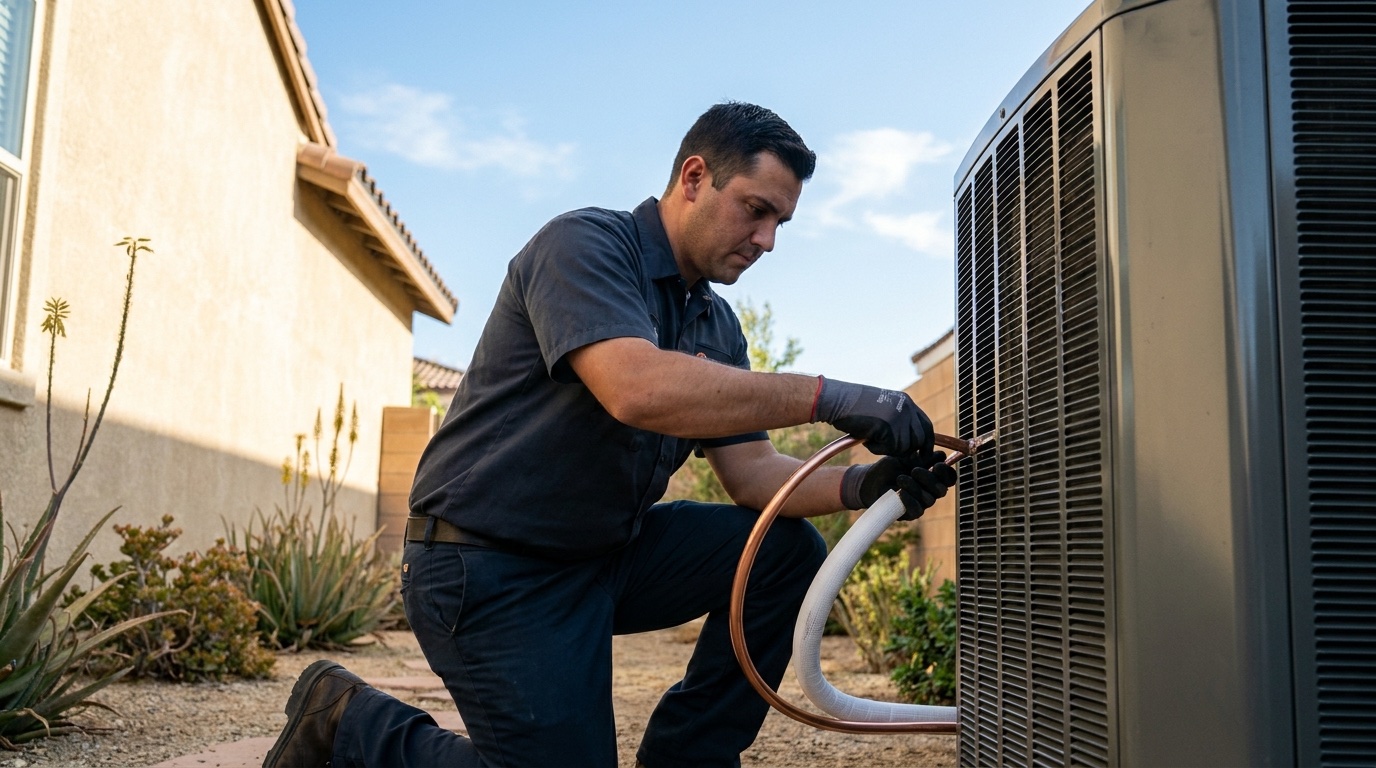
HVAC Installation & Replacement
A system sized for your house, not the last one that came off the truck — installed to Title 24 and tested before we leave.
Half the HVAC problems we get called about aren't the equipment. They're the install. A three-ton condenser bolted to a house that needs two tons, ductwork that leaks a third of the air into the attic, a return that's too small to feed the blower. The unit runs, it just runs badly — short cycles, hot back bedrooms, a utility bill that climbs every August. We start with the load, not the label on the box.
We do straight changeouts and full system replacements: furnaces, straight-cool and heat-pump condensers, coils, air handlers, ducts, and the thermostat that ties it together. One crew pulls the permit, runs the Title 24 paperwork, sets the equipment, and commissions it with gauges on the line — so what you're paying for is a system that's actually charged and balanced, not just swapped.
Sized by Manual J, not by habit
We run the load calc on your house — square footage, insulation, glass, orientation — before we quote a tonnage. Oversized systems cool fast, never dehumidify, and wear out early.
Duct sealing included, not upsold
New equipment on leaky ducts wastes the money you just spent. We test and seal the distribution as part of the job, because that's where a lot of the comfort actually lives.
Commissioned and documented
Refrigerant weighed in, static pressure and temperature split checked, airflow verified. You get the numbers in writing, plus the Title 24 registration for your records and resale.
Sizing is the whole game
Bigger is not better with air conditioning, and it's the single most common mistake we undo. An oversized condenser satisfies the thermostat in a few minutes, shuts off before it's pulled any humidity out of the air, then kicks back on — that's short cycling. You get a house that's cold and clammy, compressors that wear out years early, and rooms far from the air handler that never quite catch up.
A proper load calculation looks at your actual house: how much west-facing glass, whether the attic's insulated, how tight the envelope is, what the ducts can carry. In a lot of the older Southern California housing stock — 1950s and '60s tract homes with single-pane windows and thin attic insulation — the honest answer is that sealing ducts and adding insulation lets us install a smaller, cheaper, quieter system that actually keeps up. We'd rather right-size once than sell you tonnage you'll fight for a decade.
The ductwork decides how it feels
You can put a top-tier condenser on a house and still have a back bedroom that's ten degrees off the thermostat. That's almost always the ducts. Flex duct crushed behind a stored box, disconnected boots dumping conditioned air into a 140-degree attic, a return that's undersized so the blower starves and the coil ices — none of that shows up on the equipment sticker.
We test static pressure and, where it's called for, seal the duct system before we sign off. Mastic on the joints, properly supported runs, returns sized to feed the equipment. On a full replacement in an older home it's often the duct repair, not the new box, that finally makes the far rooms comfortable.
Heat pumps, Title 24 and what the code now expects
California's energy code has been steadily pushing toward heat pumps, and for a lot of homes here it's a genuinely good fit — a heat pump both cools in summer and heats in our mild winters off the same unit, usually more efficiently than an old gas furnace and AC pair. Whether that's right for you depends on your gas situation, your panel capacity, and your climate zone, and we'll tell you straight if a standard furnace-and-condenser setup makes more sense.
Either way, a changeout in California triggers Title 24 requirements — duct-leakage testing, refrigerant-charge verification, permit and registration. We handle that as part of the job, not as a surprise line item. It protects you: the registered paperwork is what a buyer's inspector will look for, and it's proof the system was actually commissioned instead of just hung on the wall.
A process built around no surprises
Load calc & walk-through
We measure the house, look at the existing ducts and returns, and check the electrical and gas capacity — then size the system to the building instead of matching the old nameplate.
Written proposal & options
You get equipment options at a couple of efficiency tiers, a clear scope, and a line-item price. We explain what a higher SEER2 rating buys you and where it doesn't pay back, so you decide with real numbers.
Removal & rough-in
Old equipment recovered and hauled, new line sets or duct transitions run, condensate and electrical brought to current code. Attic and closet work protected so we're not tracking insulation through the house.
Set, charge & commission
Equipment set level, refrigerant weighed to spec, ducts sealed and balanced, then we put gauges on it and verify the temperature split and static pressure before calling it done.
Inspection, walk & warranty
We schedule the permit inspection, register the Title 24 and manufacturer warranties, and show you the filter, the shutoffs and the thermostat before we leave.
Everything, under one scope
- Manual J load calculation and equipment sizing
- Removal, refrigerant recovery and haul-away of old equipment
- Furnace, condenser, coil, air handler or heat-pump installation
- Line sets, condensate drainage and code-compliant electrical/gas
- Duct inspection, sealing and return-air corrections
- Thermostat, permit, Title 24 testing and warranty registration
Built with the good stuff
HVAC Installation — common questions
How do I know what size system my house needs?
We calculate it — we don't guess from the old unit or the square footage alone. A Manual J load calc accounts for your insulation, windows and orientation, and it's common for the right answer to be smaller than what was there before, especially once we seal the ducts.
Should I switch to a heat pump?
Often yes in our climate, since one unit handles both heating and cooling efficiently, but it depends on your electrical panel, your gas setup and your climate zone. We'll lay out both options with real numbers and let you decide — no pressure toward the bigger ticket.
Why does my back bedroom never get cool?
Usually the ducts, not the equipment. Undersized returns, crushed flex runs or leaks into the attic starve the far rooms. That's why we test and seal the distribution instead of just swapping the box.
Do I need a permit for a changeout?
Yes. In California, replacing HVAC equipment requires a permit plus Title 24 duct and refrigerant testing. We pull it under our license and register the paperwork, which also protects you at resale.
How long does an install take?
A straight changeout is usually one to two days. A full system with duct repairs or a heat-pump conversion can run three to five. We give you the schedule before we start.
Is the work warrantied?
Yes. Our labor is warrantied in writing and we register the manufacturer's equipment warranty in your name so you're covered on both the install and the hardware.
What hvac installation customers say
“They gutted our 1980s bathroom and turned it into something out of a magazine. The crew showed up on time every single day and cleaned up before they left. Worth every penny.”
“Our AC quit during a July heat wave and they had a new unit in the next morning. Honest pricing, no upselling, and the house has never been this comfortable.”
“We had engineered hardwood put in across the whole first floor. The installers were meticulous about the transitions and baseboards. Looks seamless.”
Homeowners often pair this with
Planning hvac installation? Let's talk.
Tell us what you're planning and we'll set up a free, no-pressure estimate — usually within a day.
Licensed & insured — CSLB #1033999