
Energy-Efficient Insulation
Seal the air leaks first, then insulate — the order most homes get backwards.
Half the older houses we insulate have plenty of insulation already. What they don't have is an air seal, so the attic breathes straight into the living space and the batts up there are just filtering the leak. You can add all the R-value you want; if the air moves, the heat moves with it. That's why the room over the garage is always the hot one and the hallway never quite gets comfortable.
We treat the house as an envelope, not a pile of materials. Find where outside air is getting in, seal those paths, then bring the insulation up to a level that makes sense for the climate and the way the house is built. It's less glamorous than a new AC, and it typically does more for how the house actually feels.
Air sealing before R-value
We seal the top plates, penetrations and attic hatch before adding insulation. Sealing the leaks is what makes the insulation actually work.
The right material per assembly
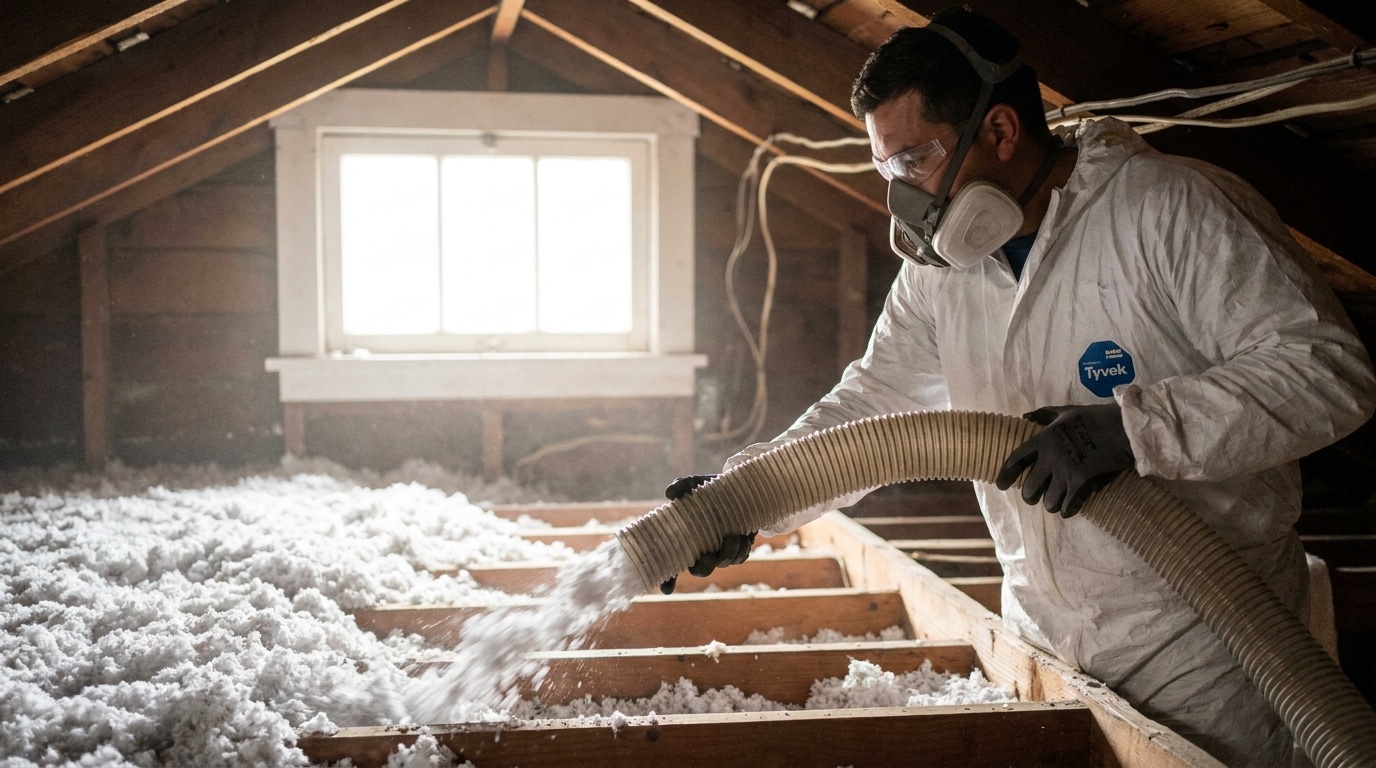
Blown-in for open attics, dense-pack or spray foam where it belongs. We match the product to the cavity instead of forcing one material everywhere.
Title 24 and rebates handled
We insulate to current California energy code where it applies and can point you to the utility rebate programs the work may qualify for.
Air leaks are the real problem
Insulation slows heat that moves through solid material. It does almost nothing to stop heat that rides on moving air, and in a typical older California house a surprising amount of conditioned air is simply leaking out the top — around recessed lights, at the gaps where interior walls meet the attic, through the pull-down stairs, along every wire and pipe that was never sealed.
So we start with a smoke pencil and a caulk gun, not a hose. Seal the top plates, gasket the can lights, foam the penetrations, weatherstrip the attic hatch. Once the air isn't free-flowing, the insulation you add on top can finally do its job — and the house stops feeling drafty in a way more insulation alone never fixes.
Matching the material to the cavity
There's no single best insulation, only the right one for each spot. Open attic floors take blown-in cellulose or fiberglass fast and cheap. Closed wall cavities in an older home usually want dense-pack, injected through small holes we patch. Rim joists, cathedral ceilings and tricky air-sealing spots are where closed-cell spray foam earns its higher cost, because it seals and insulates in one pass.
We'll tell you where the money is well spent and where it isn't. Foaming an entire attic when a few hundred dollars of air sealing plus blown-in would perform nearly as well is the kind of upsell we don't do. The goal is a house that can reduce its heating and cooling load, not the biggest invoice.
Comfort, ventilation and moisture
Tightening a house is good until it's too tight. Seal everything and give the moisture nowhere to go and you trade a comfort problem for a mold problem. So when we air-seal an attic we keep the roof ventilation working — soffit-to-ridge airflow, baffles that keep the intake clear of insulation — and in tighter retrofits we talk through whether the house needs mechanical fresh air.
In coastal neighborhoods the humidity makes this matter more, and in the hotter inland valleys the attic can hit brutal temperatures that cook the ceiling below. Getting the insulation depth and the ventilation right together is what typically keeps the upstairs livable in an August heat wave.
A process built around no surprises
Assess the envelope
We check attic and wall insulation, look for air-leak paths, verify ventilation, and note the moisture and duct situation before quoting anything.
Scope & fixed quote
You get a line-item scope — what gets sealed, what material goes where, the target R-value — and a fixed price before any work starts.
Seal the leaks
We air-seal top plates, can lights, plumbing and wiring penetrations, and the attic access before touching the insulation itself.
Insulate to target
Blown-in, batt or spray foam goes in at the depth and density the assembly needs, with baffles kept clear so the roof still breathes.
Verify & document
We confirm coverage and depth, leave the ventilation working, and hand over the paperwork you may need for rebates and resale.
Everything, under one scope
- Attic and wall insulation assessment
- Air sealing of top plates, penetrations and attic access
- Blown-in insulation (cellulose or fiberglass)
- Batt and dense-pack wall insulation
- Closed-cell spray foam for rim joists and problem areas
- Attic ventilation baffles and balance
- Old or damaged insulation removal and disposal
Built with the good stuff
Energy-Efficient Insulation — common questions
How do I know if I even need more insulation?
The tells are uneven room temperatures, a hot upstairs, high summer bills and an attic you can see the joists in. We assess it first and will tell you honestly if what you have is fine and only the air sealing needs attention.
Will this lower my energy bills?
Air sealing and insulation typically reduce heating and cooling load, and most people notice a more even, comfortable house. We won't quote you a guaranteed percentage — actual savings depend on your equipment, habits and the rest of the envelope.
Do you remove the old insulation?
When it's contaminated, rodent-damaged or wet, yes — we remove and dispose of it before installing new. When it's clean and dry we often air-seal and add over the top, which is faster and cheaper.
Does this qualify for rebates?
Insulation and air sealing often qualify under California utility and energy-efficiency programs. We document the work with the R-values and details those programs ask for, so you have what you need to apply.
Is spray foam safe?
Installed correctly and given the right cure time before re-occupancy, closed-cell foam is a proven, code-recognized product. We use it where it makes sense — rim joists and hard-to-seal spots — not as a blanket answer to every job.
What energy-efficient insulation customers say
“They gutted our 1980s bathroom and turned it into something out of a magazine. The crew showed up on time every single day and cleaned up before they left. Worth every penny.”
“Our AC quit during a July heat wave and they had a new unit in the next morning. Honest pricing, no upselling, and the house has never been this comfortable.”
“We had engineered hardwood put in across the whole first floor. The installers were meticulous about the transitions and baseboards. Looks seamless.”
Homeowners often pair this with
Planning energy-efficient insulation? Let's talk.
Tell us what you're planning and we'll set up a free, no-pressure estimate — usually within a day.
Licensed & insured — CSLB #1033999