Energy-Efficient Paint & Cool Coatings
Reflective roof and wall coatings that push the sun's heat back out before it ever gets into the house.
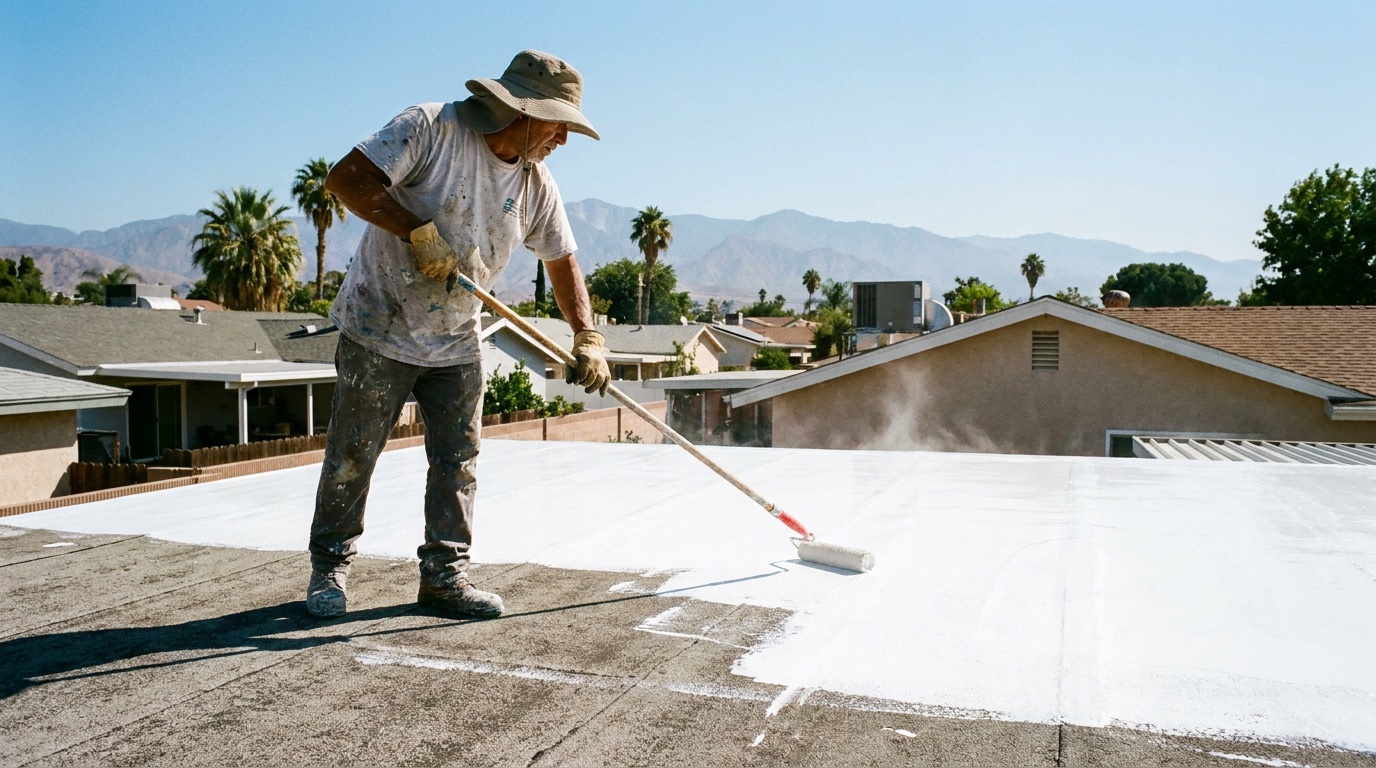
A dark roof in Riverside or the San Fernando Valley can run 150 to 180 degrees on an August afternoon. That heat doesn't stop at the shingles — it soaks through the deck, loads up the attic, and your AC spends the evening fighting it. Reflective, or 'cool,' coatings work on the front end of that problem: they bounce a large share of the sun's radiation back to the sky and shed the heat they do absorb, so less of it ever reaches the surface below.
This isn't ordinary paint with a marketing name. Cool coatings are engineered for solar reflectance and thermal emittance — how much sunlight they reflect and how readily they re-radiate heat. Applied to the right surface and prepped correctly, an elastomeric roof coating or a reflective exterior wall system can lower surface temperatures meaningfully and take some of the load off the rooms underneath.
Reflect before it enters
High-reflectance coatings send most of the sun's radiation back out, so the roof deck and walls run cooler and the attic doesn't turn into an oven by midday.
Prep decides the lifespan
Pressure wash, repair, prime the right way. A reflective coating over a chalky, unprepped surface peels — the prep is most of the job and most of the value.
Rated products, honest claims
We use CRRC-rated cool coatings and Title 24 cool-roof products where they apply, and we talk in 'can reduce' terms — never a guaranteed savings number.
How a cool coating actually works
Two numbers do the work: solar reflectance and thermal emittance. Reflectance is the share of sunlight the surface bounces straight back instead of absorbing. Emittance is how quickly the surface lets go of the heat it does take in. A good cool coating is high on both, which is why a coated white or light roof can sit dramatically cooler than the dark asphalt next to it on the same afternoon.
Color matters, but it isn't the whole story — engineered pigments can make even mid-tone coatings reflect far more infrared than a standard paint of the same shade. That's why we spec rated products rather than just 'a lighter color.' On low-slope and flat roofs the effect is biggest, because those surfaces take the most direct sun; on walls it helps most on the west and south faces that bake through the afternoon.
Where it pays off, and where it doesn't
Cool coatings earn their keep on flat and low-slope roofs, on metal roofs, and on stucco walls with heavy sun exposure — especially in the hot inland valleys where the cooling season is long. On a steep composition-shingle roof that's near end of life, a coating is the wrong spend; that roof wants replacing, and we'll say so rather than paint over a problem.
We're also straight about the ceiling on results. A coating typically reduces surface temperature and can take some load off your cooling, and it can extend the life of a roof membrane by shielding it from UV. But the real-world effect depends on your insulation, your attic ventilation, your equipment and the shade around the house. It's one layer of the envelope, and it works best alongside good insulation — not as a substitute for it.
Prep, Title 24 and durability
The failure mode for reflective coatings is almost always adhesion, and adhesion is almost always about prep. Southern California stucco and aged roofing chalk heavily; coat over that chalk without washing and priming and the new system peels in a season. So we pressure wash, repair the cracks and seams, prime the porous and bare spots, and only then apply — usually two coats at the rated thickness, because a thin single pass reflects less and wears through sooner.
For roof replacements and certain re-roofs, California's Title 24 sets cool-roof requirements in some climate zones, and many rated products carry a CRRC label with published reflectance values. Where those rules apply we use compliant products and give you the documentation. And reflective coatings hold up in the sun better than standard paint — the UV resistance that makes them reflective also helps them keep looking right for years.
A process built around no surprises
Inspect the surface
We check the roof or wall for chalking, cracks, failed caulk and moisture, confirm the substrate can hold a coating, and note the sun exposure.
Scope & fixed quote
You get a line-item scope — prep, repairs, the specific coating system and number of coats — and a fixed written price before we start.
Wash & repair
Pressure wash to remove chalk and dirt, repair cracks and seams, seal penetrations, and prime bare or porous areas so the coating bonds.
Apply the coating system
We lay down the reflective system at the manufacturer's spread rate — usually a base and topcoat — reinforcing seams and details as specified.
Inspect & warranty
We check coverage and thickness, walk the finished surface with you, and hand over the paperwork and a written labor warranty.
Everything, under one scope
- Roof and exterior surface inspection
- Pressure washing and chalk removal
- Crack, seam and penetration repair before coating
- Priming of bare, porous and repaired areas
- Reflective elastomeric roof coating systems
- Reflective / cool exterior wall coatings
- CRRC-rated and Title 24 cool-roof products where applicable
Built with the good stuff
Energy-Efficient Paint — common questions
How much will a cool coating lower my bills?
It can reduce the heat load on the rooms below and take some strain off your AC, and coated surfaces typically run much cooler in direct sun. We won't promise a fixed percentage — the actual effect depends on your insulation, ventilation, equipment and shade.
Is this just white paint?
No. Cool coatings are engineered for solar reflectance and thermal emittance and are rated for it. Standard white paint reflects some visible light but not nearly the same share of the infrared that heats the surface.
Can you coat any roof?
Most flat, low-slope, metal and stucco surfaces in sound condition, yes. A shingle roof near the end of its life should be replaced, not coated — we'll tell you honestly if a coating is the wrong call for your roof.
How long does a reflective coating last?
A properly prepped and applied elastomeric roof system commonly holds up for many years, and reflective wall coatings outlast standard paint because the same UV resistance that makes them reflective also protects the film. Lifespan depends on the product, the sun exposure and the prep.
Does it help with Title 24 or rebates?
For qualifying re-roofs, cool-roof products can help meet Title 24 requirements in certain climate zones, and some utility programs recognize reflective roofing. We use rated products where it applies and give you the documentation to submit.
Do you offer a warranty?
Yes. Our labor is warrantied in writing, and we pass through the manufacturer warranties on the coating systems we install.
What energy-efficient paint customers say
“They gutted our 1980s bathroom and turned it into something out of a magazine. The crew showed up on time every single day and cleaned up before they left. Worth every penny.”
“Our AC quit during a July heat wave and they had a new unit in the next morning. Honest pricing, no upselling, and the house has never been this comfortable.”
“We had engineered hardwood put in across the whole first floor. The installers were meticulous about the transitions and baseboards. Looks seamless.”
Homeowners often pair this with
Planning energy-efficient paint? Let's talk.
Tell us what you're planning and we'll set up a free, no-pressure estimate — usually within a day.
Licensed & insured — CSLB #1033999