Energy-Efficient Electrical Upgrades
A panel and wiring that can carry the way you live now — EVs, heat pumps, solar — and shave the waste you can't see.
Most older Southern California homes were wired for a household that didn't own an EV, a heat pump, or an induction range. A 100-amp panel with a full breaker board was plenty in 1968. Today it's the bottleneck: no room to add a car charger, lights that dim when the AC kicks on, an aging fuse or breaker panel that a home inspector flags at resale. Efficient electrical work isn't only about using less — it's about having the capacity and the safe, modern wiring to run the equipment that actually saves energy.
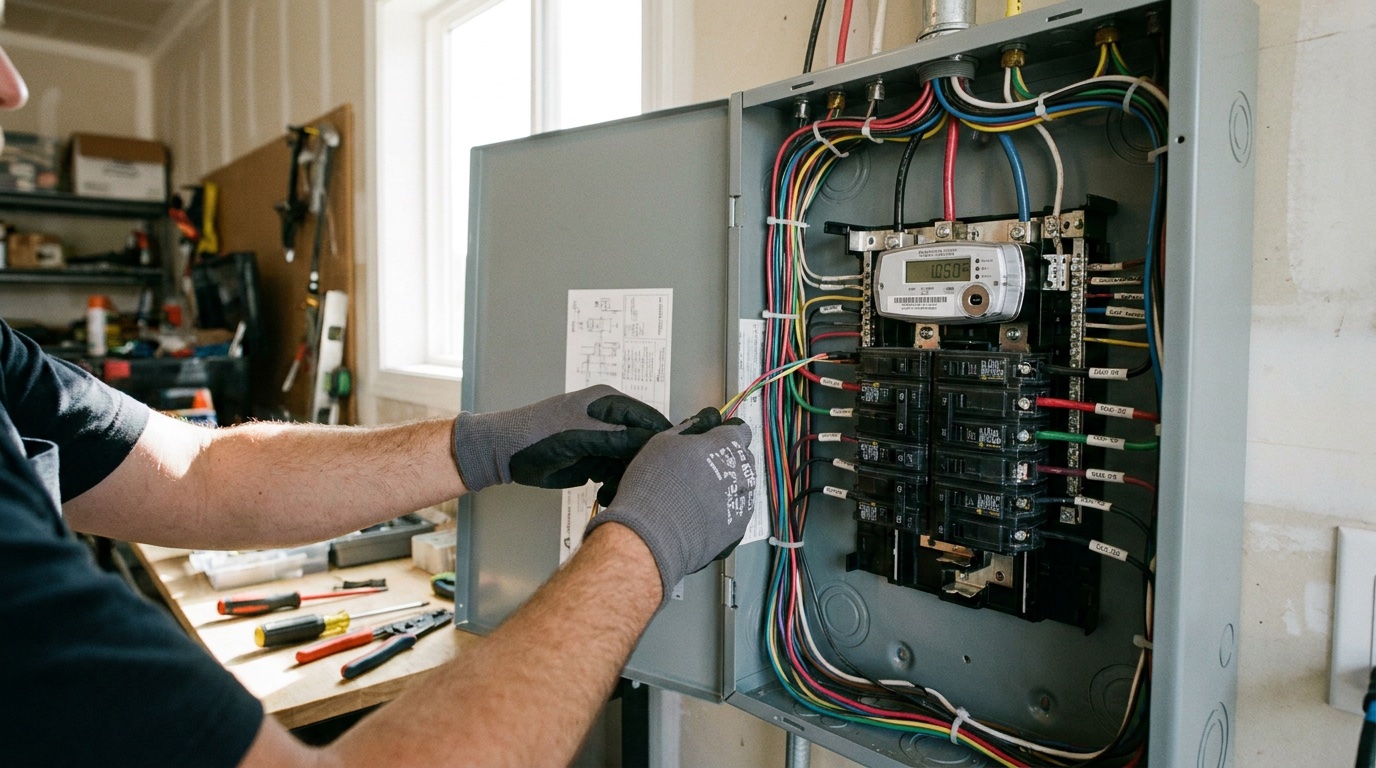
We handle service and panel upgrades, EV charger circuits, LED retrofits, smart controls, and the code corrections that come with older wiring — knob-and-tube, ungrounded outlets, aluminum branch circuits, missing AFCI and GFCI protection. One licensed crew does the load calc, pulls the permit, and leaves you with a system that's inspected, documented, and ready for what you plug into it.
Capacity for what actually saves energy
Heat pumps, EV chargers and induction cooking all draw real current. We size the service so the efficient equipment you're investing in has room to run instead of tripping the main.
LED and controls that cut standby waste
Swapping to LED and adding occupancy sensors and smart switches can meaningfully lower lighting load — we won't promise a specific percentage, but the draw drops and the bulbs stop being a recurring chore.
Old wiring brought up to code
Ungrounded outlets, missing AFCI/GFCI, backstabbed connections and aluminum branch circuits are safety issues before they're efficiency ones. We correct them as part of the upgrade, in writing, and get it inspected.
Why capacity comes before efficiency
There's a chicken-and-egg problem in a lot of energy retrofits: the equipment that saves you money — a heat pump instead of a gas furnace, an induction range, an EV you charge at home instead of buying gas — all needs electrical capacity the old house doesn't have. A 100-amp service with a packed panel simply can't add a 40- or 50-amp car-charging circuit and a heat pump without tripping. So the first efficient thing we do is often unglamorous: give the house enough service to carry the efficient future.
We start with a real load calculation instead of a rule of thumb. Sometimes the honest answer is that you don't need a full 200-amp service upgrade — a subpanel, a load-management device, or freeing up space by moving a couple of circuits gets you what you need for less money. We'd rather right-size the electrical the same way we right-size everything else: to the actual house and the actual plan, not to the biggest invoice.
EV charging and heat-pump circuits, done to last
A Level 2 EV charger and a heat pump are both continuous, high-draw loads, and the code treats them accordingly — dedicated circuits, correctly sized conductors, the right breaker, and proper location. Done well, you plug in and forget about it. Done cheaply — an undersized wire, a shared circuit, a connection that heats up under sustained load — and you get nuisance trips at best and a fire risk at worst.
We run these as dedicated, correctly sized circuits from a panel that has the headroom to feed them, and we plan for what's next: a lot of homeowners add the EV charger first and the heat pump a year later, so we'll size the service and leave the capacity so the second project isn't another panel upgrade. Where the utility offers time-of-use rates, smart charging and controls let you shift that load to the cheaper overnight window, which is where the real savings on an EV actually come from.
Lighting, controls and the wiring underneath
Lighting is the efficiency win people notice first because it's visible and it's cheap to start. Moving a house full of incandescent and halogen to LED cuts the lighting load substantially and gets rid of the ladder-and-bulb routine, and adding occupancy sensors, dimmers and smart switches trims the hours those lights actually run. We won't quote you a guaranteed savings figure — too much depends on how you live — but the connected load comes down and stays down.
The part that matters more for safety is the wiring behind the switch. Older Southern California homes turn up ungrounded two-prong outlets, missing AFCI protection on bedroom circuits, no GFCI in the kitchen and bath, backstabbed devices that loosen and arc, and the occasional run of knob-and-tube or aluminum branch wiring. These get flagged by inspectors and insurers, and they're the failures that start behind walls. When we're in the panel for an efficiency upgrade, correcting these is the responsible thing to bundle in — inspected, documented, and warrantied.
A process built around no surprises
Load calc & assessment
We run the electrical load for how you actually use the house — current draw plus what you're planning to add — and inspect the panel, grounding and branch wiring for code and safety issues.
Scope & fixed quote
You get a plan: panel size, circuits to add, fixtures and controls to retrofit, and the corrections your wiring needs, with a line-item price. Utility coordination for a service upgrade is spelled out here.
Permit & utility coordination
We pull the permit and, for a service change, schedule the utility disconnect and reconnect so the shutdown is planned and short rather than a surprise.
Upgrade & install
New panel or subpanel set and labeled, dedicated circuits run for EV or heat-pump loads, LED and controls installed, grounding and bonding brought to current code.
Inspection, walk & warranty
City inspection scheduled and passed, then we walk the labeled panel, the new circuits and the controls with you and hand over the permit paperwork and written warranty.
Everything, under one scope
- Load calculation and service/panel upgrade (100A to 200A+)
- Subpanels and load-management devices where a full upgrade isn't needed
- Dedicated EV charger and heat-pump circuits
- LED retrofit, dimmers, occupancy sensors and smart switches
- Grounding, bonding, AFCI/GFCI and code corrections
- Permit, utility coordination, inspection and labeled panel
Built with the good stuff
Energy-Efficient Electrical — common questions
Do I need a 200-amp service upgrade?
Not always. We run a load calc first — sometimes a subpanel, a load-management device or freeing up existing space covers what you need for less. We only recommend a full service upgrade when the numbers actually call for it.
Will efficient electrical lower my bill?
LED and controls reduce your lighting load, and shifting EV charging to off-peak hours can cut what that charging costs — but we won't promise a specific percentage, because it depends on your usage and your utility's rates. We're straight about that.
Can you add an EV charger to my existing panel?
Often yes, if there's capacity. We check your load and available breaker space first. If the panel's full or the service is too small, we'll tell you what the upgrade path costs before you commit.
My house has ungrounded or old wiring — is that a problem?
It's a safety and resale issue more than an efficiency one. Ungrounded outlets, missing AFCI/GFCI, aluminum branch circuits and knob-and-tube get flagged by inspectors and insurers. We correct them to code as part of the work and get it inspected.
Do you handle the permit and utility coordination?
Yes. Service and panel work is pulled under our license, and for a service change we coordinate the utility disconnect and reconnect so the power-off window is planned and short.
Is the work warrantied?
Yes. Our labor is warrantied in writing, the installation is city-inspected, and we pass through the manufacturer warranties on panels, fixtures and controls.
What energy-efficient electrical customers say
“They gutted our 1980s bathroom and turned it into something out of a magazine. The crew showed up on time every single day and cleaned up before they left. Worth every penny.”
“Our AC quit during a July heat wave and they had a new unit in the next morning. Honest pricing, no upselling, and the house has never been this comfortable.”
“We had engineered hardwood put in across the whole first floor. The installers were meticulous about the transitions and baseboards. Looks seamless.”
Homeowners often pair this with
Planning energy-efficient electrical? Let's talk.
Tell us what you're planning and we'll set up a free, no-pressure estimate — usually within a day.
Licensed & insured — CSLB #1033999